Skip to content
Hillside Farm Painting
Westport Historical Society
Westport, Massachusetts

Search Term Record

Metadata

Related Records

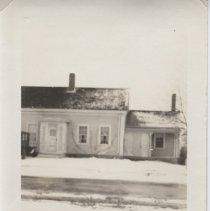
  1. Frank Macomber's home/Westport Point
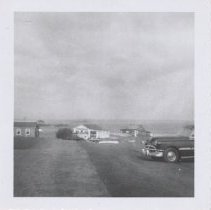
  2. Hurricane '54 - Laura's Rest.
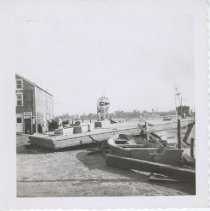
  3. Hurricane '54
  4. Hurricane 1954
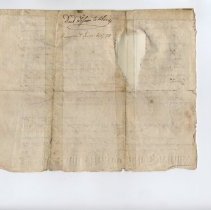
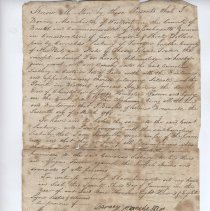
  5. Deed Hannah Sisson to John Almy
  6. 2001.043.001 - Aerial photo of Westport Point and Harbor 1937

    Westport Point Westport River Westport Harbor

    Record Type: Photo
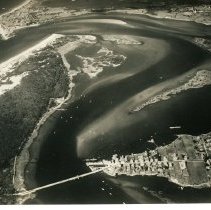
    Westport Point and Harbor
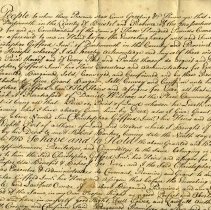
  7. Deed, Manchester to Seabury
  8. deed
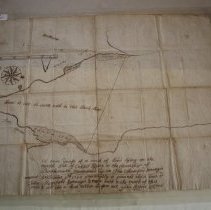
  9. Map
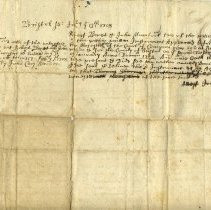
  10. deed
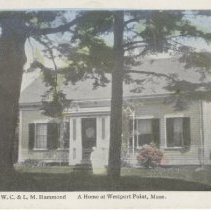
  11. A home at Westport Point, Mass.
  12. 2003.029.002.096 - Westport Point Methodist Espicopal Church

    Westport Point Westport Point Methodist Church

    Record Type: Archive
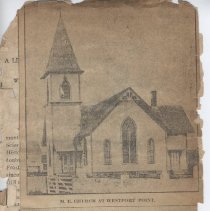
    Scrapbook
  13. 2004.11.001 - Westport Point Store and Polly Cass

    Westport Point Westport Point Market

    Record Type: Archive

  14. 2004.170.004 - work of Gladys Gifford Kirby WHS 2004.170.004 Extracts form the Log of the Bark, "George and Mary" 1850 The bark, "George and Mary" was built at South Dartmouth in 1850 and received her name from her first captain and his wife who lived at Westport Point. After many cruises, she was burned in New Bedford as a special feature of a Fourth of July celebration. Such quotations as these from the logs of the whalers give us most vivid impressions of the life of those men who followed the sea in search of whales. Friday, October 26, 1855 These 24 hours commences with strong breezes from the W.N.W. and clear pleasant weather. At 7 A.M. weighed anchor in Westport harbor and stood out to sea and hove to under whole topsails, jib and spank, waiting for the captain and officers. So ends these 24 hours. Monday April 7th, 1856 These 24 hours begins with fine breezes and pleasant weather steering for the island. At three P.M. came to anchor in the roads of Anna Boana, and the niggers were thicker than crows on carrion; furled the sails and got supper; the middle and later part much the same; I went on shore trading, all hands employed in getting wood and water. So ends these 24 hours. Monday, July 14th, 1856 These 24 hours begins with light breezes from E.S.E and overcast weather, steering W.S.W. under all sail. The middle part strong breezes and pleasant weather. At daylight called all hands and commenced stowing down the oil. At eight P.M. saw the island of St. Helena, bearing W. by S., distant 60 miles. All hands employed in stowing down the oil. So ends 24 hours. Friday, October 3rd, 1856 These 24 hours begins with light breezes from W.S.W., the ship heading south by the wind. The middle part fine breezes from the W.N.W. and overcast weather, the latter part light airs from the S.S.W. and pleasant weather. At 8 A.M. lowered the boats for a humpback, struck and killed one to the larboard boat. At 10 A.M. took him long side, got up the cutting gear. So ends these 24 hours. Wednesday, January 7th, 1857 These 24 hours begins with strong breezes from W.S.W. and pleasant weather, steering to the eastward under short sail. At sundown spoak the Kanaivah(?). All hands employed in clearing away heads and cutting up blubber. The middle and latter part much the same. Saw a dead whale, lowered the larboard boat and took him along side and cut him in.

    Westport Point Whaling George and Mary (bark)

    Record Type: Archive

  15. 2004.170.016 - Westport Point, 1809 WHS 2004.170.016 Old Maids School Westport Point 1809 Ruth Cadman Previous to the establishment of the establishment of the district school at Westport Point in 1809, Ruth Cadman had a private school in the village. This Ruth Cadman was the daughter of Christopher and Hannah Cadman who came from Portsmouth R. I. and settled at Westport Point. This school was held in different homes different years. The parents paid a small tuition for each child and also bought what books the child might use. This school might well be called Westport's First and Only Kindergarten, as we are told one of the purposes in opening it was to take in small children to keep them out of the way. We are also told that when the children grew tired she put them to bed. There has been preserved a record of a summer school which this Ruth Cadman kept in 1823. The chief interest possibly lies in the fact that with this record we can compare the amount paid to teachers in the town and elsewhere for services today. The record reads as follows: Days Thomas Watkins 230.53 Harcolas Manchester285.66 Warren Gifford 24.05 Samuel Brightman 139 .32 Jeremh. Brightman 127 .29 Jethro Howland 99 .23 Jonathan Mayhew 121 .28 John Potter 239.55 Joseph Tripp 191.44 John Underwood 252.58 Pardon Case 155.36 Deborah Bly 105.24 Nicholas Davis 132.30 John H. Sowle 134.31 Joseph Davis 96.22 Charles Macomber 33.33 Pardon Macomber 83.19 Isaac Cory, Jr. 193.45 Ruth Gifford (widow) 120.28 Nancy Brown 154.35 Benj. Hicks 158.36 Reuben Tripp 66.15 Humphrey Macomber 44.10 Chris Davis 16.03 Ruth Cadman 50.11 ____ ____ 3246 $7.56 The Village of Westport Point pages 14 and 15

    Westport Point Schools

    Record Type: Archive

  16. 2004.178.004 - Basil Hall talks to Mary Giles Rev. Basil Hall Interviewed by Mary Giles August 19, 1975 Interviewer (Mary Giles) - This morning, as we start this tape, your niece, Barbara Wicks, and my daughter, Ann, are with us. We are looking out the window at your beautiful view of the West River. For so many years I've heard many good things about you. I'd like you to tell me as much about yourself as you care to. Basil Hall - I was born on the first of January 1888 in New York. My father was the minister of the First Presbyterian Church in Brooklyn, and we came down here for our vacations. I was brought here when I was six months old and I've been here pretty nearly every summer since. The first two summers, we lived in a house hear the north end of Main Road in the Village, it was owned by some Mayhews, and father got rooms there. I had an old English nurse, Elizabeth. I have a picture of myself lying in an English perambulator. I do remember the earliest Fall River boat trips, which in many ways were the shining lights of my life. Those were marvelous trips. We drove over to New York in a hack and caught the Fall River boat down in lower Manhattan at 5:00 o'clock in the evening. Father tried to get outside staterooms, and we stood or sat outside those staterooms as we went around the Battery under the Brooklyn Bridge, then all along the East River. We are on the deck as we watched the city and Long Island Sound go by. We watched the lights of the towns and early to bed to listen to the little orchestra that was playing on the boat. We arrived in Newport very early in the morning-between 3:00 and 4:00 a.m. We could hear the stevedores taking out luggage and bringing it ashore, and then we went on to Fall River and got there very early too. I suppose around 6:00 a.m. In those days, we had two stores at Westport Point, one on the East side where the present market is. The three Tripp brothers, Alfred, Albert and Herbie, owned it. Most always all three of them came with a carriage and a luggage wagon, and it was a long, long ride over sandy road. It was very exciting when we came to the hill where we could see the ocean. Father bought right away and loved it. He was brought here by the Lucius Sheldons, parishioners in Brooklyn. Their son had had tuberculosis and they thought then that a long voyage helped T.B. It didn't, but we asked him what they liked best along the coast, and they said, 'Westport Point.' So they came down here and bought very much land. The white house that Herb Hadfield is now painting, and all the land to the east over to Steve Delano's (were Sheldons'). They came down here from Brooklyn and bought it. There was a land promotion going on. Henry Brown, who was a 'sugar person' - in the sugar business - and Henry Baker, who was related to Mary Baker, had planned this development, which was Eldridge Heights on the hill above this. Everything was laid out in avenues and streets. Nobody had ever bought anything. Father had to buy it lot by lot. He had to buy the streets to cancel them. Then he bought more down to the river. By the time we got into the house up here, it was late in 1889. I was between one and two. They carried me up once, in a basket before the house was finished so they could get the view. Then we came as children. I had one sister then' my other sister was born later. There were three children: K-B-E, Katherine, Basil and Eleanor. We had wonderful times up here enjoying nature. Evelyn Weston's father, Eldoras Weston, was one of the carpenters. We liked him very much. Chester Babcock, whose nephew lives in the village, was one of the men too. He worked for my family every summer. He was kind of looking after the property in the winter too. I had a good friend, Guy Brightman, son of one of the lumbermen. They had a big lumberyard at the foot of the street. Guy and I got along beautifully, but I lost him when he died, he was very young. There was a windmill on the lumberyard. Perry Brightman was one of the men, and I can't remember the other's name. I think they did turning as well as sawing. The schooners brought in lumber. There were two schooners here at Westport Point. The Mary Douglas was one and the John G. Pettis the other. The Pettis was owned by the Boyce family, who lived out on the end of Cape Bial Lane, in a house that's still there. We played with the Boyce children. We liked the family very much, especially Bertha, who was an invalid. There was a channel dug from the main channel right up to the end of Cape Bial, so that they could bring their schooner all the way in there to the dock. That couldn't be done today. There's absolutely no water there now. Picnics stand out in my mind as I think back to childhood. We had a rowboat and we'd row up to the Islands in the West River. Father named them all. There was 'Mysterious Island' and 'Giddy Island,' etc. There was no bridge, of course, and we'd row up into the East River to Crooked Creek on the north side of Horseneck strip for a picnic. My father was a wonderful person. He only lived to be 56. After preaching at the First Presbyterian Church in Brooklyn, he was president for 11 years of Union Theological Seminary in New York. He spoke (and was a favorite) at colleges and universities all over America. Twice Chicago University sent him around the world - on the Lasker Lectureship in 1906. He took the family around the world with him. I didn't go the second time, as I stayed at Harvard where I was studying. Westport Point, as a village, looked much the same as it does now, except that the street was unpaved. The houses are extraordinarily much the same after 85 years. We got to know the people who lived here. It was an extraordinary group of men - Captains who'd been out with the whaling fleet and they were living on as elderly men, and it was a wonderful group. William Potter and his brother, Zoeth. Zoeth lived where the Feiningers do now (next to the Methodist Church). William Potter was a fisherman - very fine. Then there were the Sowle brothers, Joe and Andrew - and Bill Grinnell. Lafe Gifford was one of the finest. Lafe was Marion Pineau's grandfather. Many of those men had catboats and kept them in beautiful condition, and one of the events here was watching the catboat fleet - on any good day - going out through the Harbor off to Gooseberry Neck and Vineyard Sound - to the ocean. Then you'd see them coming in. They had to make it to the Northwest, and then turn to the Southeast. There were no trees on this hill at that time. That's why father brought in the Scotch pine, for which Scotch Pine Lane was named. Imagine it, no trees. We'd go up to the top of the hill and see everything coming over the horizon, almost to Sakonnet Point and Buzzards Bay, and off to No Man's Land. We'd watch the schooners and tramp steamers go by. I love trees, but I'd love to have a great many of them out of the way to have that superb view again. We could stand on the top of the hill and see almost to Adamsville. Once we saw the Thomas W. Lawson, that seven-masted schooner, go by. Once we saw a hotel going by on a barge. We looked out to the horizon and here was this big hotel going by. When my father was sent by Chicago University, we traveled. My experience in India came in the days of the student volunteer movement, when young people had terrific pressure put on them at the Northfield Conference to become missionaries. For a long time, I had a guilty feeling, because I couldn't quite make myself a missionary. I didn't know whether it was right for a Christian not to be. They felt that this world should be evangelized. They had no fear at all of the world war or - they just had a feeling that the world was getting better and better. I've always felt very close to India particularly, and somewhat so to Japan. We stayed very little in China. The Orient made my thinking more interesting than it would have been. That Sake bottle - that gourd - is just a reminder of Japan, and that little lantern hanging there, is a lantern from Japan. We have all kinds of relics of our travels. After my Harvard years, I began my theological training at Edinburgh University in Scotland. We lived a year over there, 1910, and, at the end of that year, the World Missionary Conference was held in Edinburgh. As secretary of the Conference, I stayed on. I'm very fond of Scotland. I'm not a well-known person in this region. It's because I've been here so long and have known people for a long time. I published Father's life and some little things, 'The Early Days at Synton.' My mother gave me 'Dune Cottage,' which is just north of the Point School, now Mrs. Floyd Robb's home, and we thought that we could live here. It was before many of the summer people had settled here for good. We found it a little lonely, so we went other places most years. For ten years, we went south in the winter and that spoiled us. Those winters here might be hard, but as my mother's favorite saying goes, 'You cannot have had it.' I love bird study and I always have. I wandered over the hill always. The ecology has changed. When Mrs. Hall died this spring, we had the little service in the cemetery here at Westport Point. Just as we were doing it, a Mockingbird was singing in the woods, just to the east - early spring in March. Well, thank you very much. It's been a lovely opportunity to be here with you, watching your little fleet from your windows.

    Westport Point

    Record Type: Archive

Thank You!

Confirmation Message Here....