Skip to content
Hillside Farm Painting
Westport Historical Society
Westport, Massachusetts

Person Record

Metadata

Related Records

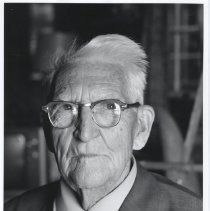
  1. 2004.178.004 - Basil Hall talks to Mary Giles Rev. Basil Hall Interviewed by Mary Giles August 19, 1975 Interviewer (Mary Giles) - This morning, as we start this tape, your niece, Barbara Wicks, and my daughter, Ann, are with us. We are looking out the window at your beautiful view of the West River. For so many years I've heard many good things about you. I'd like you to tell me as much about yourself as you care to. Basil Hall - I was born on the first of January 1888 in New York. My father was the minister of the First Presbyterian Church in Brooklyn, and we came down here for our vacations. I was brought here when I was six months old and I've been here pretty nearly every summer since. The first two summers, we lived in a house hear the north end of Main Road in the Village, it was owned by some Mayhews, and father got rooms there. I had an old English nurse, Elizabeth. I have a picture of myself lying in an English perambulator. I do remember the earliest Fall River boat trips, which in many ways were the shining lights of my life. Those were marvelous trips. We drove over to New York in a hack and caught the Fall River boat down in lower Manhattan at 5:00 o'clock in the evening. Father tried to get outside staterooms, and we stood or sat outside those staterooms as we went around the Battery under the Brooklyn Bridge, then all along the East River. We are on the deck as we watched the city and Long Island Sound go by. We watched the lights of the towns and early to bed to listen to the little orchestra that was playing on the boat. We arrived in Newport very early in the morning-between 3:00 and 4:00 a.m. We could hear the stevedores taking out luggage and bringing it ashore, and then we went on to Fall River and got there very early too. I suppose around 6:00 a.m. In those days, we had two stores at Westport Point, one on the East side where the present market is. The three Tripp brothers, Alfred, Albert and Herbie, owned it. Most always all three of them came with a carriage and a luggage wagon, and it was a long, long ride over sandy road. It was very exciting when we came to the hill where we could see the ocean. Father bought right away and loved it. He was brought here by the Lucius Sheldons, parishioners in Brooklyn. Their son had had tuberculosis and they thought then that a long voyage helped T.B. It didn't, but we asked him what they liked best along the coast, and they said, 'Westport Point.' So they came down here and bought very much land. The white house that Herb Hadfield is now painting, and all the land to the east over to Steve Delano's (were Sheldons'). They came down here from Brooklyn and bought it. There was a land promotion going on. Henry Brown, who was a 'sugar person' - in the sugar business - and Henry Baker, who was related to Mary Baker, had planned this development, which was Eldridge Heights on the hill above this. Everything was laid out in avenues and streets. Nobody had ever bought anything. Father had to buy it lot by lot. He had to buy the streets to cancel them. Then he bought more down to the river. By the time we got into the house up here, it was late in 1889. I was between one and two. They carried me up once, in a basket before the house was finished so they could get the view. Then we came as children. I had one sister then' my other sister was born later. There were three children: K-B-E, Katherine, Basil and Eleanor. We had wonderful times up here enjoying nature. Evelyn Weston's father, Eldoras Weston, was one of the carpenters. We liked him very much. Chester Babcock, whose nephew lives in the village, was one of the men too. He worked for my family every summer. He was kind of looking after the property in the winter too. I had a good friend, Guy Brightman, son of one of the lumbermen. They had a big lumberyard at the foot of the street. Guy and I got along beautifully, but I lost him when he died, he was very young. There was a windmill on the lumberyard. Perry Brightman was one of the men, and I can't remember the other's name. I think they did turning as well as sawing. The schooners brought in lumber. There were two schooners here at Westport Point. The Mary Douglas was one and the John G. Pettis the other. The Pettis was owned by the Boyce family, who lived out on the end of Cape Bial Lane, in a house that's still there. We played with the Boyce children. We liked the family very much, especially Bertha, who was an invalid. There was a channel dug from the main channel right up to the end of Cape Bial, so that they could bring their schooner all the way in there to the dock. That couldn't be done today. There's absolutely no water there now. Picnics stand out in my mind as I think back to childhood. We had a rowboat and we'd row up to the Islands in the West River. Father named them all. There was 'Mysterious Island' and 'Giddy Island,' etc. There was no bridge, of course, and we'd row up into the East River to Crooked Creek on the north side of Horseneck strip for a picnic. My father was a wonderful person. He only lived to be 56. After preaching at the First Presbyterian Church in Brooklyn, he was president for 11 years of Union Theological Seminary in New York. He spoke (and was a favorite) at colleges and universities all over America. Twice Chicago University sent him around the world - on the Lasker Lectureship in 1906. He took the family around the world with him. I didn't go the second time, as I stayed at Harvard where I was studying. Westport Point, as a village, looked much the same as it does now, except that the street was unpaved. The houses are extraordinarily much the same after 85 years. We got to know the people who lived here. It was an extraordinary group of men - Captains who'd been out with the whaling fleet and they were living on as elderly men, and it was a wonderful group. William Potter and his brother, Zoeth. Zoeth lived where the Feiningers do now (next to the Methodist Church). William Potter was a fisherman - very fine. Then there were the Sowle brothers, Joe and Andrew - and Bill Grinnell. Lafe Gifford was one of the finest. Lafe was Marion Pineau's grandfather. Many of those men had catboats and kept them in beautiful condition, and one of the events here was watching the catboat fleet - on any good day - going out through the Harbor off to Gooseberry Neck and Vineyard Sound - to the ocean. Then you'd see them coming in. They had to make it to the Northwest, and then turn to the Southeast. There were no trees on this hill at that time. That's why father brought in the Scotch pine, for which Scotch Pine Lane was named. Imagine it, no trees. We'd go up to the top of the hill and see everything coming over the horizon, almost to Sakonnet Point and Buzzards Bay, and off to No Man's Land. We'd watch the schooners and tramp steamers go by. I love trees, but I'd love to have a great many of them out of the way to have that superb view again. We could stand on the top of the hill and see almost to Adamsville. Once we saw the Thomas W. Lawson, that seven-masted schooner, go by. Once we saw a hotel going by on a barge. We looked out to the horizon and here was this big hotel going by. When my father was sent by Chicago University, we traveled. My experience in India came in the days of the student volunteer movement, when young people had terrific pressure put on them at the Northfield Conference to become missionaries. For a long time, I had a guilty feeling, because I couldn't quite make myself a missionary. I didn't know whether it was right for a Christian not to be. They felt that this world should be evangelized. They had no fear at all of the world war or - they just had a feeling that the world was getting better and better. I've always felt very close to India particularly, and somewhat so to Japan. We stayed very little in China. The Orient made my thinking more interesting than it would have been. That Sake bottle - that gourd - is just a reminder of Japan, and that little lantern hanging there, is a lantern from Japan. We have all kinds of relics of our travels. After my Harvard years, I began my theological training at Edinburgh University in Scotland. We lived a year over there, 1910, and, at the end of that year, the World Missionary Conference was held in Edinburgh. As secretary of the Conference, I stayed on. I'm very fond of Scotland. I'm not a well-known person in this region. It's because I've been here so long and have known people for a long time. I published Father's life and some little things, 'The Early Days at Synton.' My mother gave me 'Dune Cottage,' which is just north of the Point School, now Mrs. Floyd Robb's home, and we thought that we could live here. It was before many of the summer people had settled here for good. We found it a little lonely, so we went other places most years. For ten years, we went south in the winter and that spoiled us. Those winters here might be hard, but as my mother's favorite saying goes, 'You cannot have had it.' I love bird study and I always have. I wandered over the hill always. The ecology has changed. When Mrs. Hall died this spring, we had the little service in the cemetery here at Westport Point. Just as we were doing it, a Mockingbird was singing in the woods, just to the east - early spring in March. Well, thank you very much. It's been a lovely opportunity to be here with you, watching your little fleet from your windows.

    Westport Point

    Record Type: Archive

  2. Rev. Basil Hall
  3. 2009.035.001 - Index to Oral Histories Alton and Isabel Boan Interviewed by Mary Giles November 4th 1976 Subjects: Farming, Native Americans, Schools Etta Allen Palmer Interviewed by Mary Giles November 4th 1975 Subjects: Indian Burying Ground, Kate Cory, Farming, Lobstering Everett Coggeshall Interviewed by Mary Giles November 10th, 1976 Subjects: Westport Harbor, Hurricanes, Farms John Hart Interviewed by Mary Giles Undated Subjects: Grist Mill and Store, Ice Cutting Albert E. Lees, Jr. Interviewed by Mary Giles August 14th, 1975 Subjects: Schooling, Markets George Raposa Interviewed by Mary Giles May 14th, 1976 Subjects: Immigration, Farming, Market Gardening, Dirt Roads Andrew Borden's Farms Hartley Howe Interviewed by Mary Giles August 6th, 1973 Subjects: Cherry and Webb Point, Franklin Roosevelt, Cranberry Bog Borden R. Tripp Interviewed by Mary Giles October 7th, 1976 Subjects: Bojuma Farm, Adamsville Store, Notes: Opinions on Town Issues of the Day, Borden, Judy, Mary = Bojuma Eugene Feio Interviewed by Mary Giles November 19th, 1976 Subjects: Post Offices, Stage Coach Henry Sampson Interviewed by Mary Giles January 24th, 1976 Subjects: Potato Farming and Marketing Thomas P. Mead Interviewed by Mary Giles November 16th, 1976 Subjects: Photography Education Lincoln Tripp Interviewed by Mary Giles November 21st, 1976 Subjects: Tripp Ancestry, Historical Society Development Ideas, Cultural Development Ideas Helen E. Ellis and Rosamond Peirce Interviewed by Mary Giles September 15th, 1976 Subjects: Remodeling of Old House at Westport Point, Helen Ellis' Sculpture Emma Hart Widow of Boat Builder Fred Hart Interviewed by Mary Giles Fall, 1976 Subjects: Boats Built by Husband George Medeiros Interviewed by Mary Giles November 20th, 1976 Subjects: Dairy Farming, State Laws Relating to Land, Notes: Family History, Involvement in Numerous Organizations Janice Lawton Field Interviewed by Mary Giles October 4th, 1976 Subjects: Mayflower Ancestry, Antique Shop Notes: Interest in Historical Society and Possible Future Homes Milton Borden Interviewed by Anne Kennison June, 1976 Subjects: Tramps and Hoboes at Town Farm, Indians, Water Holes, Strawberry Farms, Family Activities Notes: Milton Borden grew up at the Town Farm Mabel Ball Crosby Interviewed by Mary Giles Undated Subjects: Oxen Incident; Shearing, Spinning, Weaving; 'Salat" Foods; Flowers and Herbs William H. Barker Interviewed by Mary Giles Undated Subjects: World War II Experience Notes: Concerns about Town Development, Town Meetings John Swartz Interviewed by Mary Giles September 19th, 1976 Subjects: "Village Commons" Rita and David Rozinha Interviewed by Anne Kennison May 14th, 1976 Subjects: Fishing, 1938 Hurricane Experience, Westport Point, Mill Ponds and Mills Herbert G. Hadfield Interviewed by Mary Giles March 21st, 1977 Subjects: Art/Scrimshaw, Town Landings Notes: Critical of new housing; fearful of overdevelopment, effects of Town Dump; Plans to Build Self-sustaining Home Mae Magee Holmes Interviewed by Mary Giles Undated Subjects: Dance, Teaching and Performing, Roger and Dorothy Acheson Interviewed by Mary Giles Undated Subjects: Painting,Dairy Farming Audrey Tripp Interviewed by Mary Giles Undated Subjects: Experiences in Westport School System Archer and Della Tripp Interviewed by Mary Giles October 5th, 1976 Subjects: Herring Run at Westport Harbor; Rum Running Arlene Gifford Interviewed by Mary Giles Fall, 1976 Subjects: Wolf Pit School, Music Teacher Notes: Bitter about Bicentennial Committee Benjamin Baker Interviewed by Mary Giles December 6th, 1976 Subjects: Variety of interests Notes: At interview time he was a student at Westport Middle School, a great nephew to Hartley Howe, age 13; concerned about too much building in town William Almy, Jr. Interviewed by Mary Giles October 25th, 1975 Subjects: Family Genealogy, Gooseberry Neck, Horse Breeding and Hunt, Description of House Notes: John James Audubon was family friend Etta Palmer and Mabel Crosby With Mary Giles (While riding along Drift and Main Roads) Subjects: Comments on various properties en route Norman H. Sasseville Interviewed by Mary Giles Undated Subjects: Conservation Commission, Town Meeting Government Gerald E. Miller Interviewed by Mary Giles Undated Subjects: Land Trust Julius T. Smith Interviewed by Mary Giles December 3rd, 1975 Subjects: Wildlife, birds, market gardening, Bell School events Notes: Mentions of Turtle Rock Farm and Sunnyside Farm, wages paid Mary Hix Brown and Durant Brown Interviewed by Mary Giles August 18th, 1975 Subjects: Families including Davis, Sowle, Allen, Russell, Earle, Waite, Hix, Hicks Notes: Also discusses rum distilleries and trade, slave cemeteries, whaleboat building, details of land divisions and early houses, mechanics of ferry operation Mary A. W. Sowle Interviewed by Mary Giles December 4th, 1975 Subjects: Local doctors, Westport Point Notes: John Babcock noted for building doll houses and furniture Richard Earle Interviewed by Mary Giles December 11th, 1975 Subjects: Fishing Notes: Greatly detailed information especially on lobstering and swordfishing; references to fishermen William White, James Hollis, Arthur Denault, and Raymond Davoll; Prelude Corporation Dorothy R.Gifford Interviewed by Mary Giles September 21st, 1976 Subjects: Westport Art Group, Personal History Notes: Discusses Norman Gifford, husband and educator Rev. Basil Hall Interviewed by Mary Giles August 19th, 1975 Subjects: Westport Point Notes: Describes New York to Fall River boat trips; purchase and building at the Point; defunct land promotion named Eldridge Heights Elizabeth Lees and Carlton Lees Interviewed by Mary Giles November 12th, 1976 Subjects: Westport Point Wharf, Public Service Career Notes: Names antecedents Cummings and Bowers; Sherman Family Cemetery Alice Blossom Interviewed by Dorothy Gifford Subjects: Blossom Road Area, Wampanoag Indians, Farm Life Notes: Mentions charcoal makers on Sanford Road, short train rides from Sanford Road to Beulah Road, a "boiling spring" on their farm Marion Reed Interviewed by Mary Giles November 11th, 1976 Subjects: North Westport, Indian Cemetery, Indian Perry Family, Notes: Much discussion of local Protestant churches and mergers Ann Baker - Architect Interviewed by Mary Giles November 15th, 1976 Subjects: James Tripp House, Building Moving Skills Notes: Discussion on loss of individuality as it affects building Practices Jones Shannon Interviewed by Mary Giles December 2nd, 1976 Subjects: Episcopal Church in a Barn on Main Road Daniel Meader Interviewed by Mary Giles October 29th, 1975 Subjects: Westport Harbor, Work on Building Charlton Estate Notes: Describes building stone walls; coal delivered by schooner to Adamsville Harold Wood Interviewed by Mary Giles November 17th, 1976 Subjects: Teaching School, Service as Selectman, Sewage Disposal Problem Alford Dyson Interviewed by Mary Giles November 14th, 1976 Subjects: Background in Mills and Unions Notes: Served on School Committee and as Selectman Charles Costa Interviewed by Mary Giles November 21st, 1976 Subjects: Dairy Farming, Avid Interest in Town Affairs, Service as Selectman and Board of Health Member Notes: During World War II high many High School boys served as volunteer firemen, it being understood that when the fire alarm sounded, they were immediately released from class to respond Allen G. (Bill) Tripp Interviewed by Mary Giles October 12th, 1976 Subjects: Development and Operation of Family Boat Building and Boat Yard Richard Paull Interviewed by Mary Giles October 14th, 1976 Subjects: Building of Family Home at Westport Point, Scout Master Experiences, Fishing for Oysters and Herring Notes: Reminiscences of Browns, Brownells and Potters Eleanor Tripp (Mrs. Louis H. Tripp) Interviewed by Mary Giles October 13th, 1976 Subjects: Purchase and Restoration of Handy House, Founding of Women's Club and Well Child Clinic Notes: Quotes records of Eli Handy, first Doctor Handy, 1764-1812 Eleanor Simmons (about Oscar Palmer) Interviewed by Mary Giles November 19th, 1976 Subjects: Registry of Voters and Assessor, Farming Notes: Attended Bell School Edward Yeomans Interviewed by Mary Giles November 13th, 1976 Subjects: Teaching, Peace Corps Notes: Considered responsible for bringing others to live at Westport Point: Tucker, Liepman, Adams, Harris, Ring, Kohlenberg, Deknatel, Trueblood, Rockwell William Pierce Interviewed by Mary Giles September 19th, 1976 Subjects: Farming Strawberries, Blueberries, Raspberries; Police Work, Major League Baseball

    Palmer Homestead Farming Native Americans Schools Hurricane gristmill Ice making Bojuma Farm Cranberries Boats Poor Farm Handy House Handy Hill

    Record Type: Archive

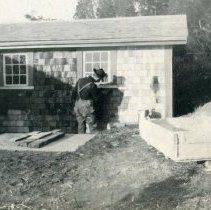
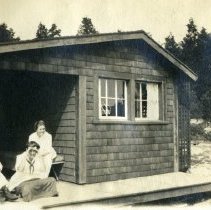
  4. 2010.021.038 - BD. H painting - New well.

    Westport Point Synton

    Record Type: Photo
    Print, Photographic
  5. Print, Photographic

Thank You!

Confirmation Message Here....